Cross-Device UX at Scale
I helped design an intuitive interface enabling seamless cross-device collaboration - now shipped to 100M+ users worldwide.
Role: UX Designer (Interaction & Motion) · Huawei HarmonyOS · 2019–2023

Problem

Users struggled with fragmented experiences across phones, tablets, TVs, and wearables. Connecting devices often required multiple apps or complex steps.

My Role

UX & Motion Designer - responsible for interaction flows, motion principles, and prototypes to demonstrate usability. I designed and tested using Sketch, After Effects, and Cinema 4D, iterating closely with engineers to ensure seamless implementation.

Goal

Design a unified, intuitive interaction system for cross-device collaboration. Through the process, we introduced drag-and-drop device connection as the signature method - simplifying setup into a single fluid action.

Impact

• Flagship HarmonyOS feature showcased for global cross-device marketing.
• Deployed to 100M+ users worldwide.
Patent filed (EP4318199A1), selected as one of Huawei’s Top 10 Annual Inventions.[View Patent]• Key component in iF Design Award 2022–winning system. [View Award]
How I Shaped the Design

1. Defined Opportunity & Designed Early Versions

Technical Potential
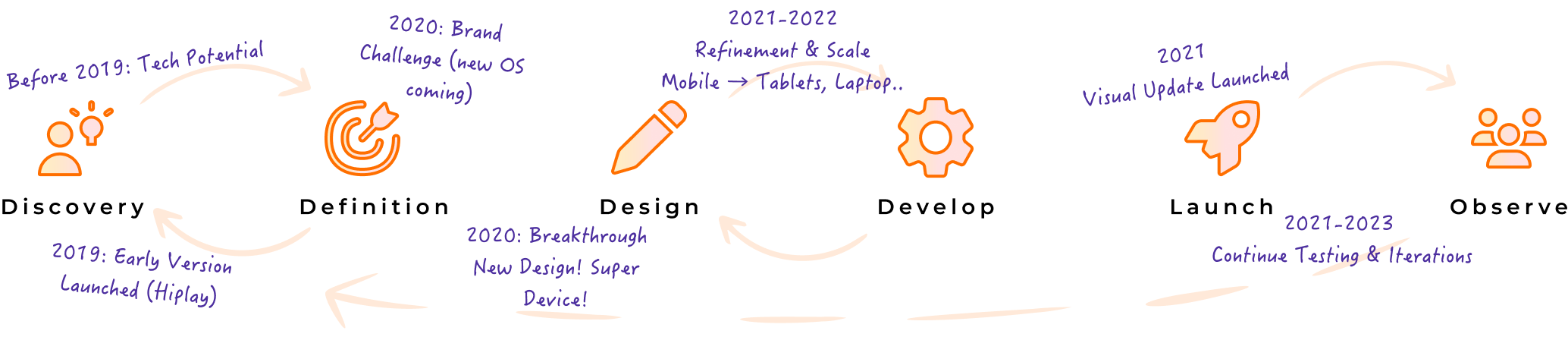
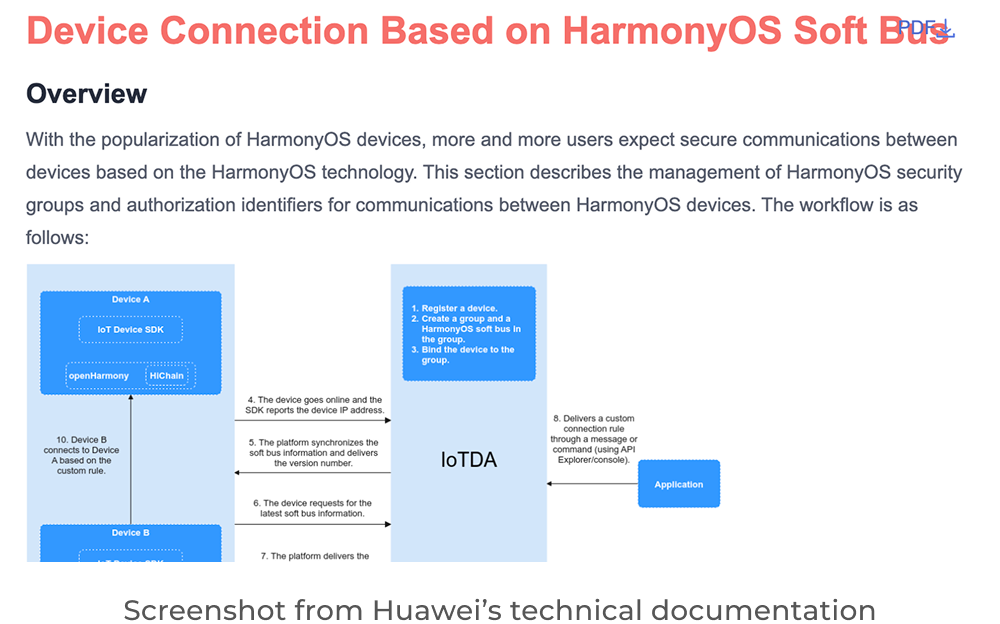
By 2019, Huawei’s distributed soft bus technology made multi-device collaboration technically possible, but users lacked a simple, branded way to connect. The challenge was to transform backend complexity into a seamless, intuitive experience.
The name Super Device was chosen to emphasize the vision: a single, unified interaction that makes multiple devices feel like one.
No items found.
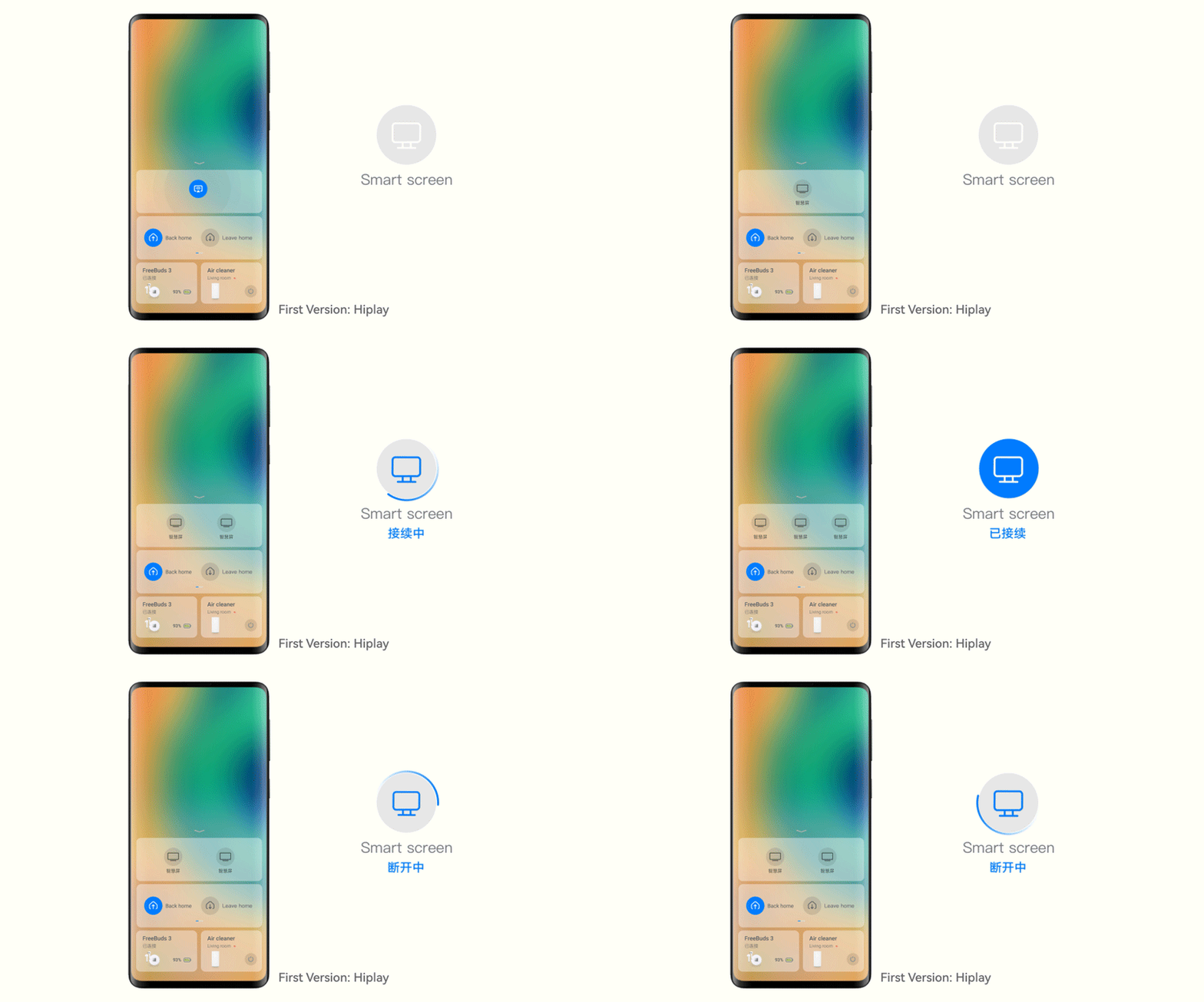
New Feature - Hiplay (2019): First Steps
I joined in 2019 to contribute to the first version, Hiplay. It was the first attempt to combine device connection and control into a single system-level panel. Users could swipe up to open a modal and access basic functions such as casting to a TV or pairing earphones.
• Participated in brainstorming for interaction and visual concepts in the early version.
• Led motion design
for the first iteration - shaping flows for device discovery and connection, improving perceived quality.
• Collaborated with developers
to ship the first working version.
Early Feedback & Brand Challenge
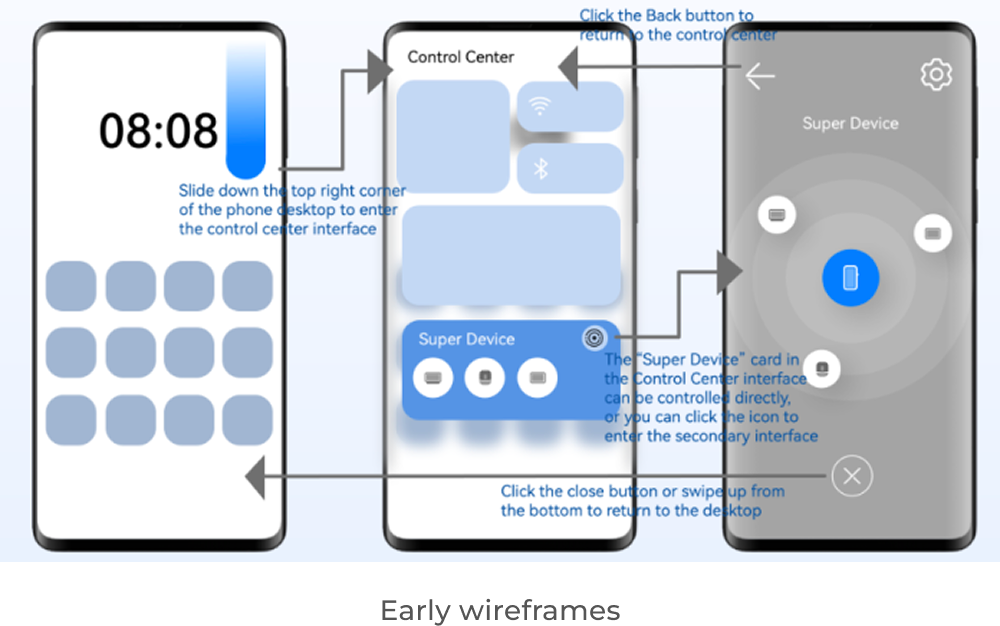
Early testing of Hiplay revealed awkward gestures, unclear flows, and a plain visual style. With the launch of HarmonyOS in 2020, these usability gaps evolved into a brand-level challenge: create a unified interaction system aligned with the new vision of “One Harmonious Universe.” (Design Philosophy)
• Translated user testing data into actionable design insights, e.g., moving entry to the Control Panel for easier access.
• Contributed to early OS-level brainstorming and design thinking.
• Proposed opportunities to embed the new brand values of simplicity, unity, and premium quality into system-level features.
No items found.
How I Shaped the Design

2. Created & Championed the Breakthrough Interaction

Team Ideation
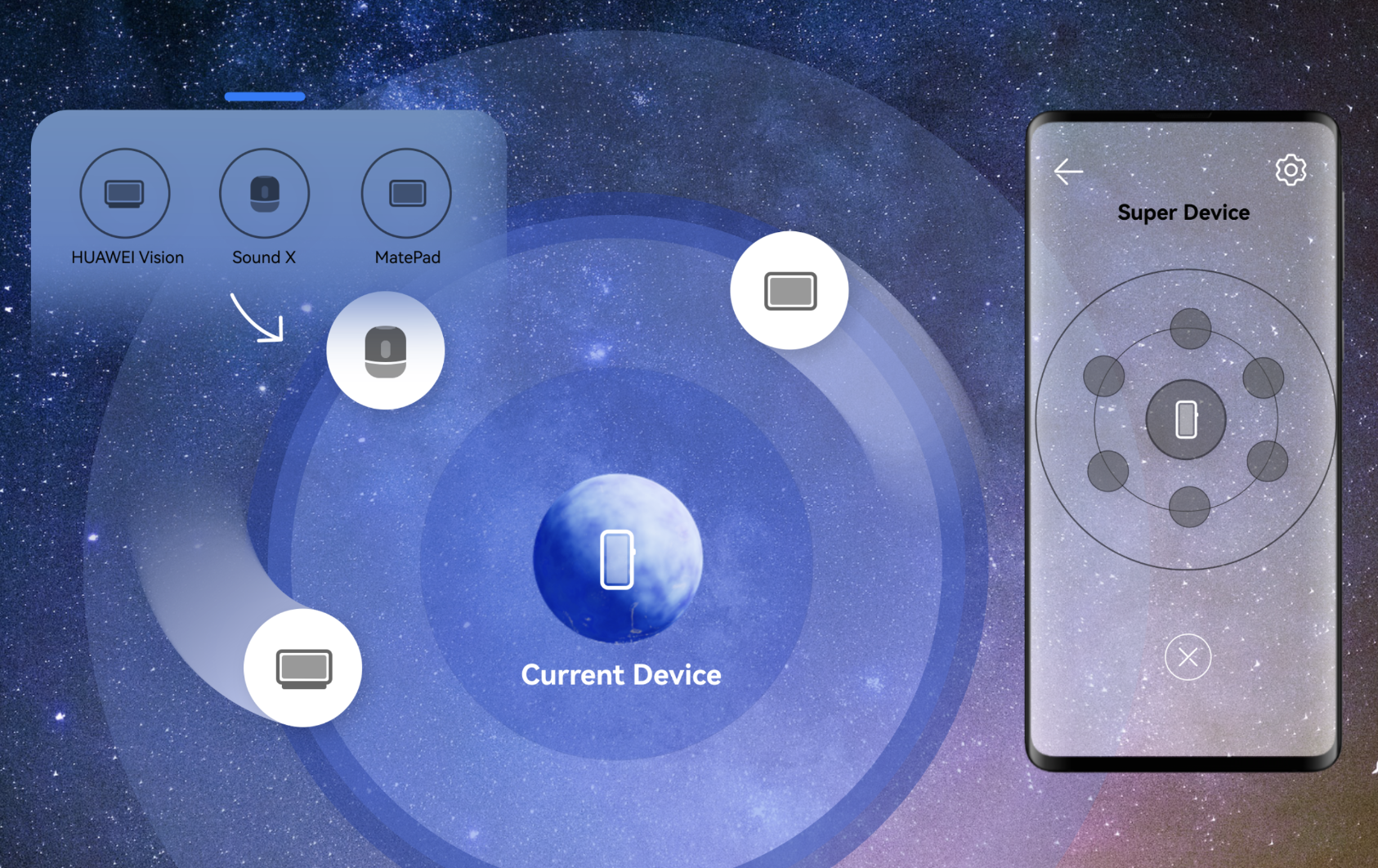
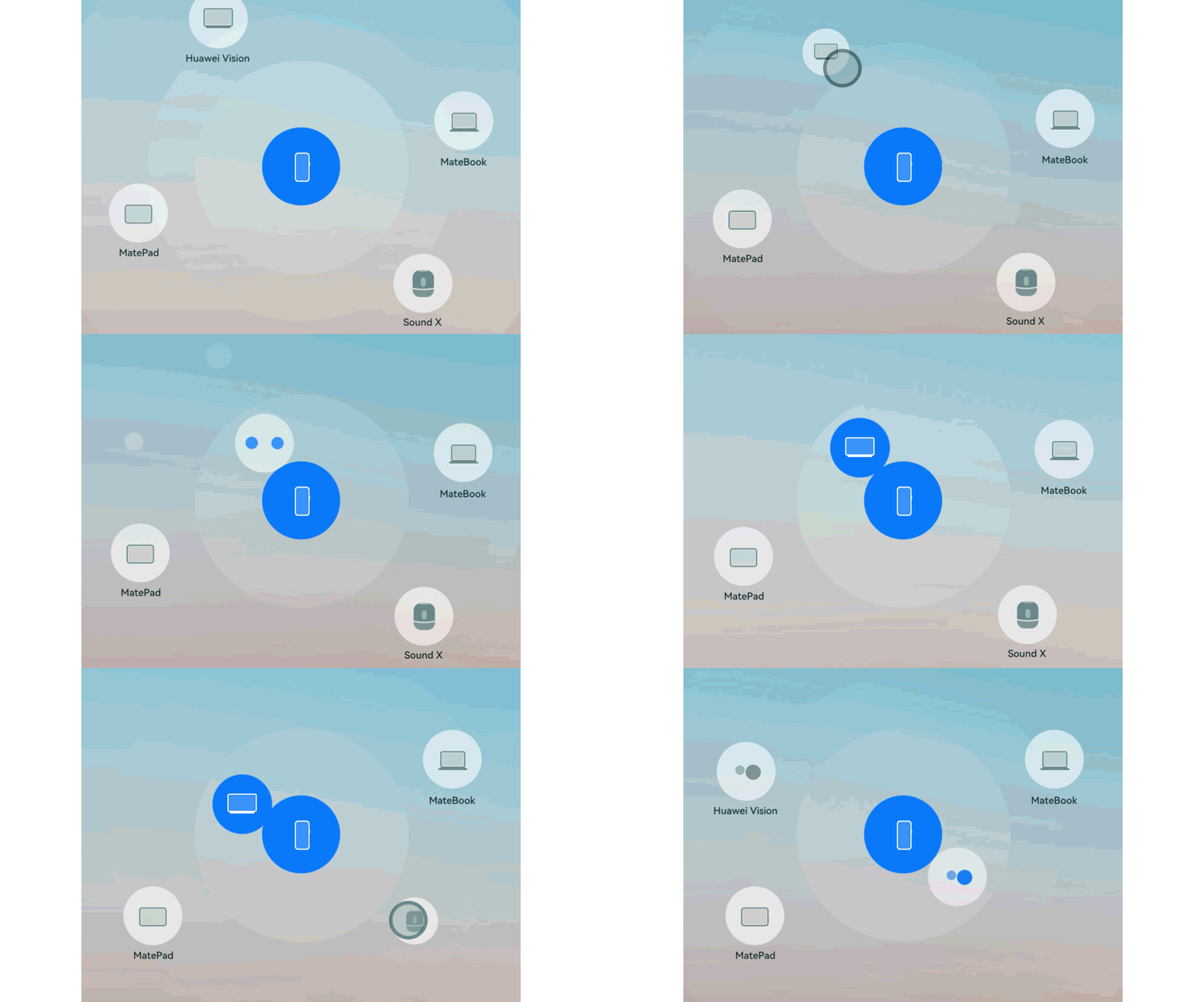
Together, we explored multiple layouts - full-screen lists, half-screen cards, and orbit-style models. We aligned on an orbit-style UI: the current device in the centre, surrounded by connected devices like planets in a universe.
No items found.
The “Aha” Moment
The turning point came when I saw our orbit-style draft, with devices arranged around a central hub like planets orbiting a sun - I realized drag-and-drop could transform the concept into a natural, branded interaction: as intuitive as pulling two objects together in real life.
Championing Drag-and-Drop
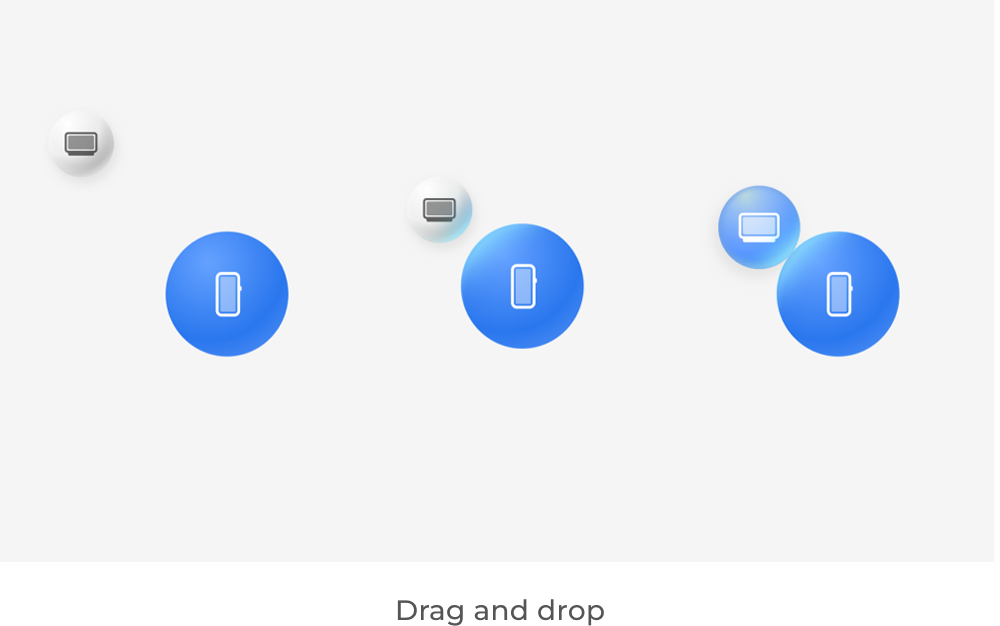
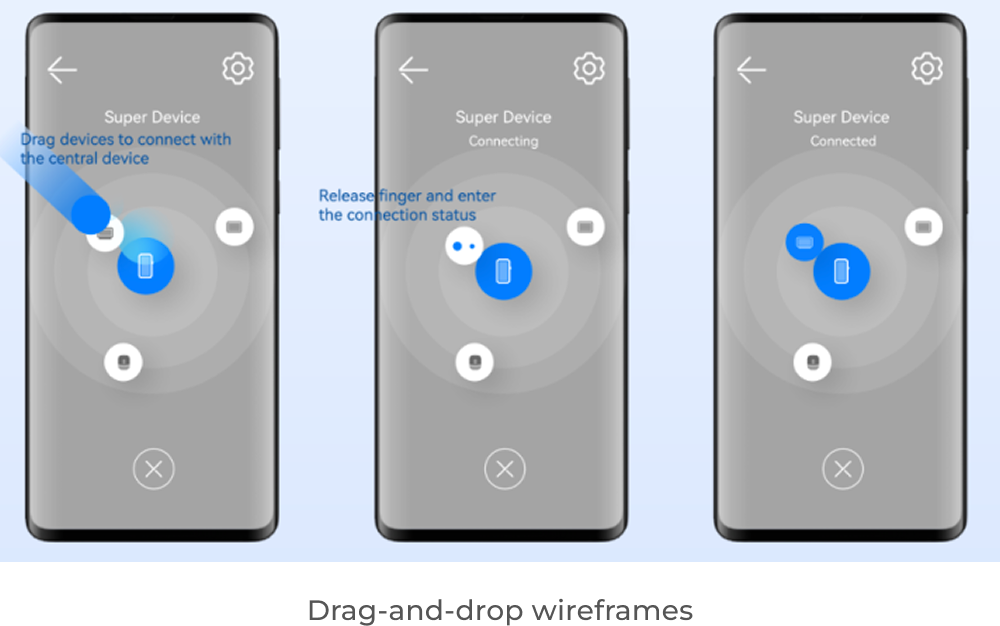
I proposed users drag a device toward the center and watch it “dock” like a satellite in orbit. This made the feature both delightful and aligned with Huawei’s vision of simplicity and unity.
• Proposed and championed drag-and-drop as the signature gesture.
Positioned it as a user-centric solution (intuitive, discoverable) and a strategic differentiator (unique branded metaphor).
Advocated with cross-functional leaders to gain alignment.
Persuading Stakeholders to Adopt a New Interaction Paradigm
To persuade stakeholders, I quickly built a motion demo video showcasing the orbit animation, drag gesture, and visual polish (particles, capture motion). This demo became the proof of concept that shifted the conversation:
• Clearly communicated the vision to executives and engineers.
• Accelerated approvals
through multiple design reviews.
• Established
drag-and-drop as the signature gesture of Super Device - a decision that shaped every iteration afterward.
How I Shaped the Design

3. Refined the Design & Scaled Across Devices

Interaction Flow & Motion Design
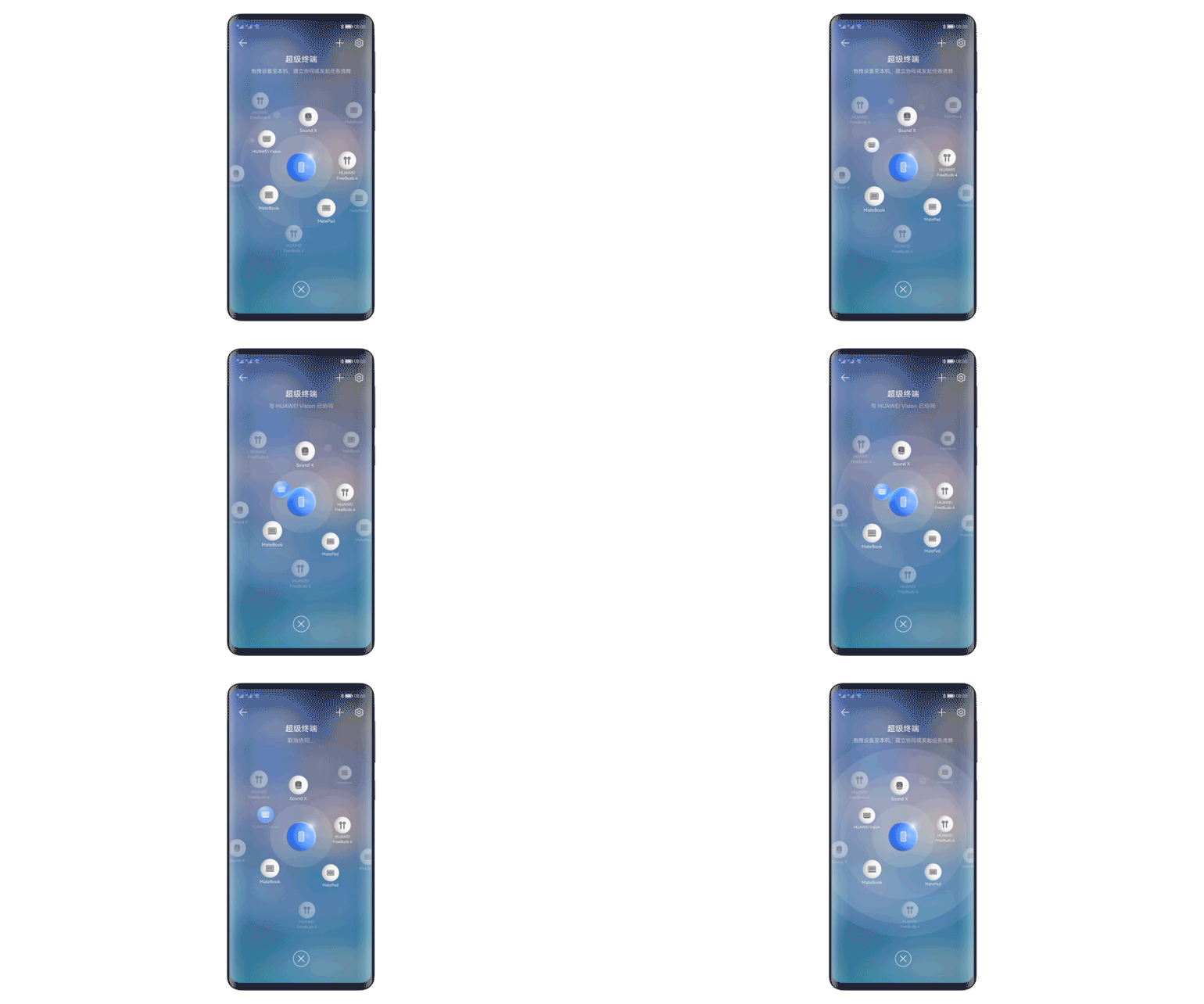
Motion model, gravitational model, GUI random sense design, material design, light design and background design.
Completed detailed interaction flows and polished visual/motion details.
• Drove design reviews
and pushed for a consistent branded experience.
• Delivered specs to developers
, collaborating closely to solve technical challenges.
Led weekly cross-functional syncs with PMs and engineers to track progress.
No items found.
Iterations Informed by Testing (2020–2021)
After HarmonyOS 2.0 & 3.0 launched, we gathered usability testing insights to iterate.
• Translated insights into concrete design solutions.
• Led visual & motion updates
in iterative releases.
     ○ Added scaling animations to suggest drag affordance.
     ○ Enhanced lighting and textures for a more premium, immersive feel.
     ○ Added outer orbits to display more connected devices.
Scaling Across Product Lines (2021–2023)
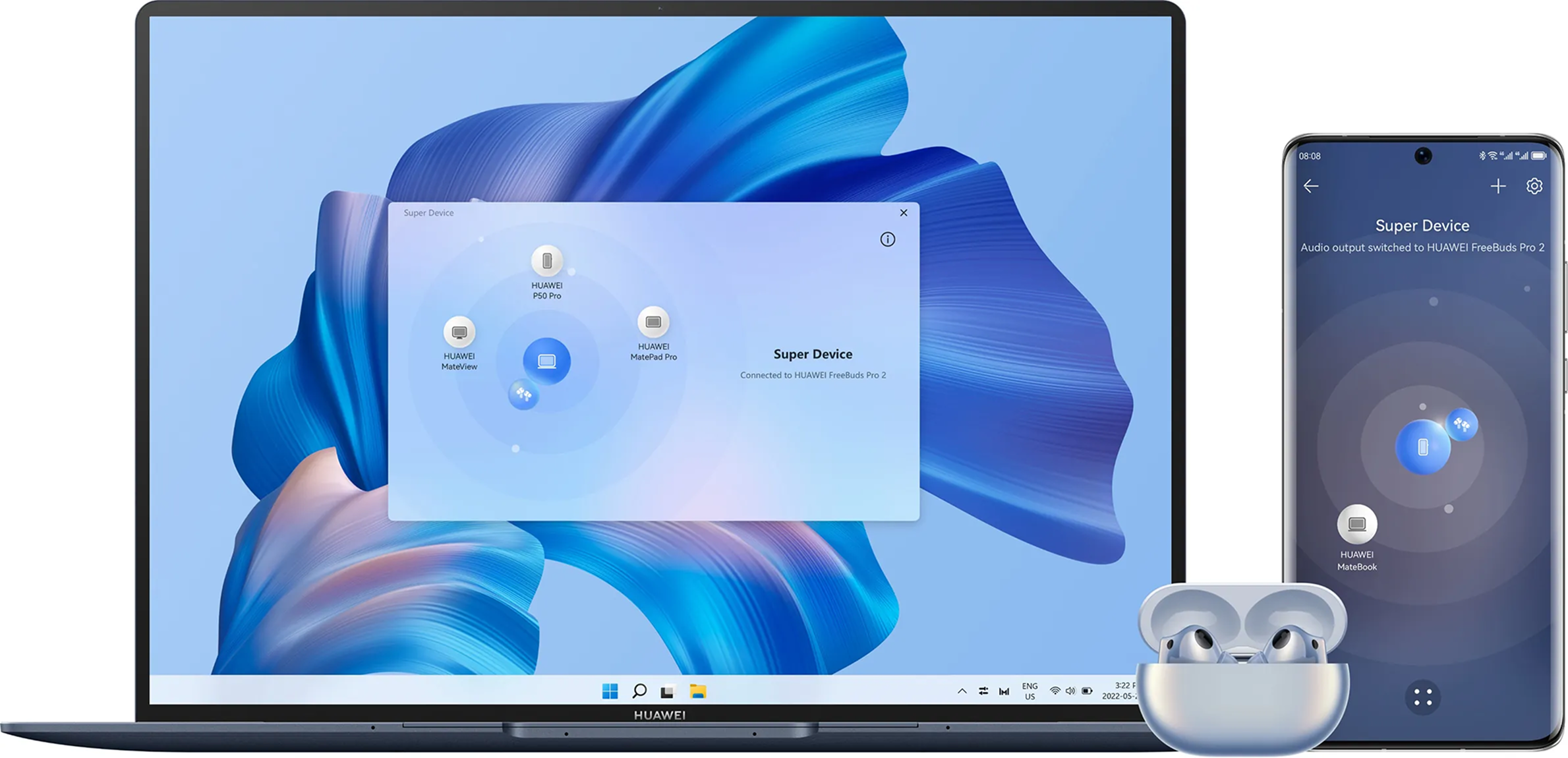
Given market success, the company expanded Super Device to tablets, laptops, TVs, and wearables. Adapting the design for different devices and orientations also required careful attention to detail - for example, adjusting animation speeds for different screen sizes.
• Adapted designs to different screen sizes and device types.
• Delivered
cross-device design specs to ensure consistency.
• Partnered
with engineering teams to maintain coherent interaction models at scale.
No items found.
Product & Market Impact
Shipped to 100M+ users worldwide as a flagship HarmonyOS feature.
• Showcased in global marketing
campaigns as a differentiator.
• Patent filed
(EP4318199A1), later selected as one of Huawei’s Top 10 Annual Inventions.
• Recognized with iF Design Award (2022)
as part of the HarmonyOS system.
User & Design Impact
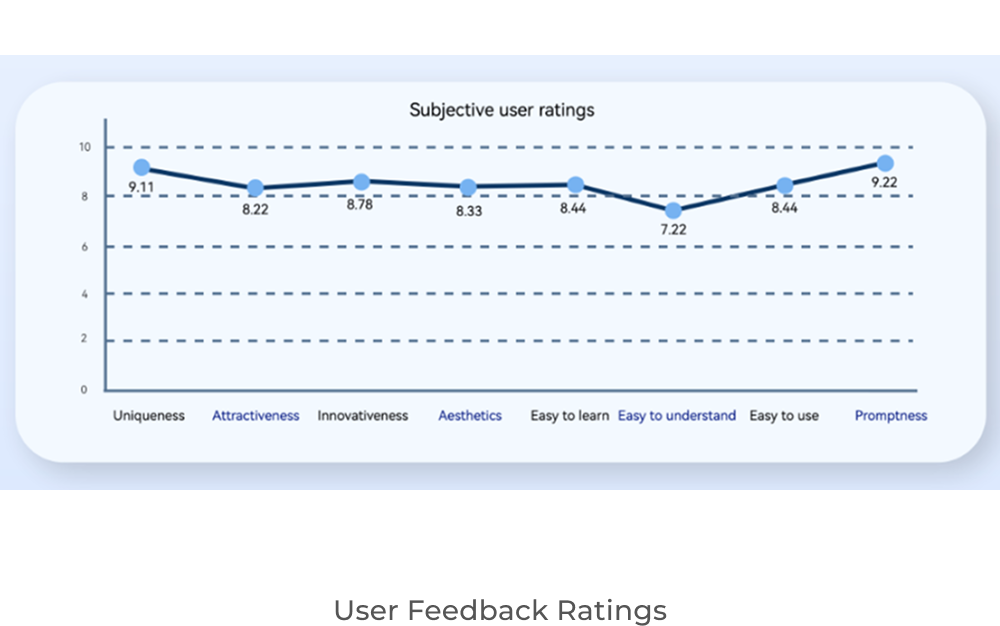
• Usability scores improved from 3.4 → 5.6/6 on ease of understanding and aesthetics.
User testing praised clearer interactions and immersive visuals.
Shifted perception: users saw multi-device collaboration as intuitive rather than technical.
The feature became a brand symbol of HarmonyOS design, influencing other system-level features.
No items found.
Evolving Toward a Design-Driven Mindset
At first, the feature was engineering-led, focused on showcasing backend capability. Through iteration, I helped shift it toward a design-driven approach - simplifying flows, ensuring security, and prioritizing user experience. This project reinforced my belief that great system features must start with user needs, not just technology.
Lessons in Long-Term Collaboration
Unlike smaller features, this was a multi-year, multi-team project. Many innovative ideas die in large organizations, but this one survived because we persisted. I learned how to advocate for design ideas, influence stakeholders, and gradually grow from a contributing designer into a core member of the team.
Special Thanks
I’m grateful to my colleagues and team members who made this project possible.Special thanks to Fei Ye, feature owner of Super Device, for continuous support and guidance. I’d also like to thank Lina Tao, Javy Weng, Feng Dong, Zhiyan Yang, and many others for their collaboration.

NDA Notice
All content presented here is based on publicly released information. I have strictly respected my NDA obligations - any unreleased designs or internal details are not included. Some early-stage concepts have been recreated for this portfolio to illustrate my contributions. User testing visuals and data have been blurred or simplified where necessary to protect confidentiality.